
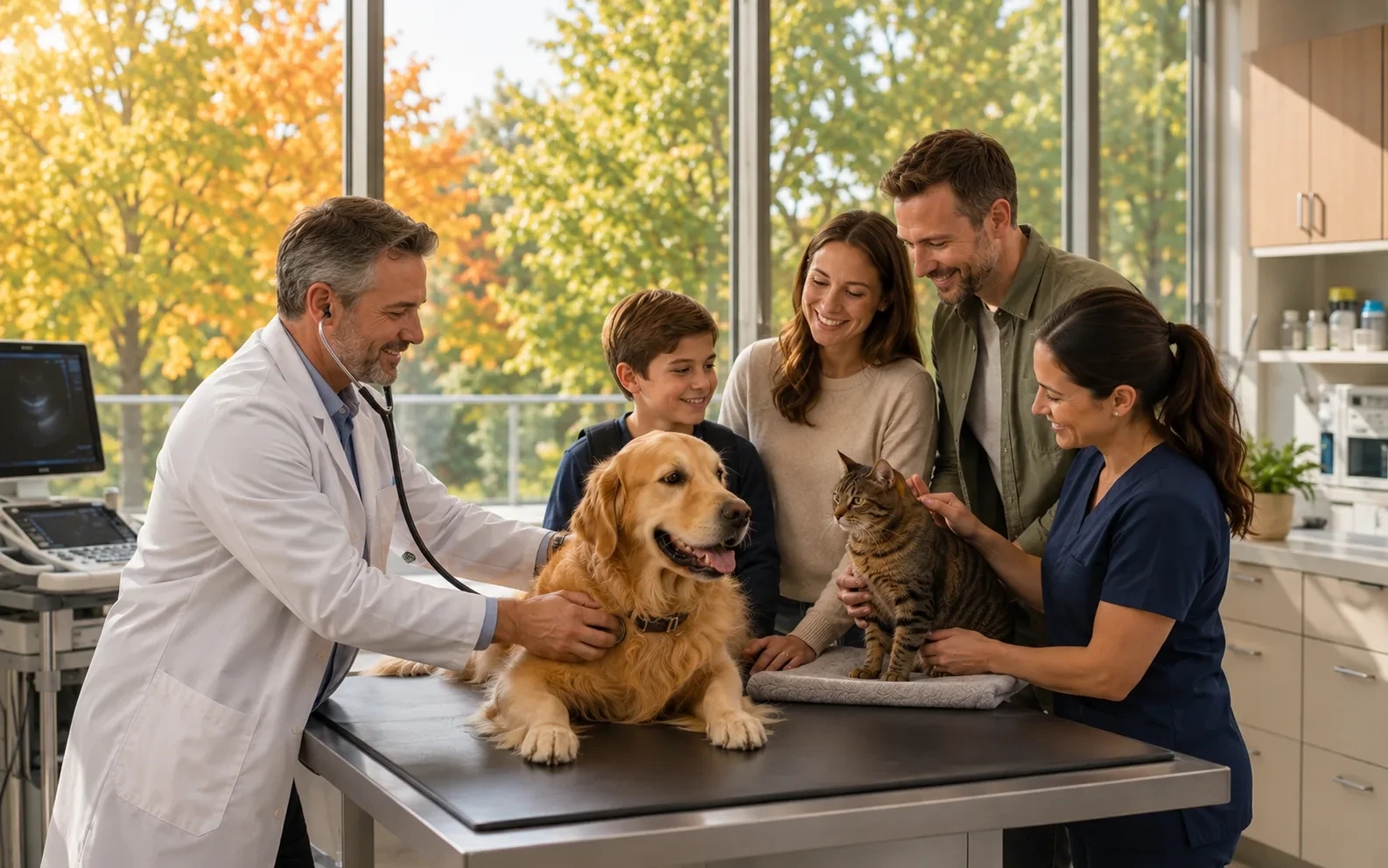
Helping Dogs and Cats Transition Into Autumn
As summer comes to an end, families begin preparing for a new season of work, school, and structured routines. While these seasonal transitions often feel exciting for people, they can be surprisingly challenging for pets. Dogs that enjoyed constant companionship throughout the summer may suddenly find themselves spending more time alone, while cats may become unsettled as household activity shifts and familiar routines disappear.
At the same time, late summer is an ideal opportunity to focus on preventive healthcare. Scheduling a wellness examination before fall allows your veterinarian to identify emerging health concerns, update preventive care, and ensure your pets are prepared for changing weather and activity levels. Seasonal parasite protection is equally important, especially for cats who spend time outdoors or share their homes with other pets.
Understanding how behavioural adjustments and preventive healthcare work together helps families support their pets physically and emotionally during this important time of year. By recognizing changes early and maintaining consistent veterinary care, you can help both dogs and cats enjoy a healthier, happier transition into autumn.
Why Seasonal Changes Affect Pets More Than Many Owners Realize
Pets thrive on routine. Even small changes in daily schedules can influence their emotional well-being. During summer, many families spend more time outdoors, enjoy vacations together, and maintain flexible schedules. Dogs often receive more walks and playtime, while cats become accustomed to increased household activity.
Once school resumes and work schedules return to normal, these familiar patterns change almost overnight. Pets may suddenly experience quieter homes, altered feeding times, fewer interactions, and different exercise routines.
Although many animals adjust quickly, others require additional support. Understanding these behavioural changes allows owners to respond with patience instead of frustration.
Helping Dogs Cope with Back-to-School Separation Anxiety
Dogs form strong emotional bonds with their families. After weeks of constant companionship during summer, being left alone for extended periods may become stressful.
Separation anxiety is more than simply missing their owners. It is a genuine behavioural condition that may develop gradually or appear suddenly after routine changes.
Common signs include:
- Excessive barking or whining after family members leave
- Destructive chewing around doors or windows
- Scratching at entryways
- Restlessness or pacing
- Indoor accidents despite previous house training
- Loss of appetite
- Excessive drooling
- Constant shadowing of family members before departures
These behaviours are not acts of disobedience. Instead, they often indicate emotional distress.
Fortunately, many cases can be improved through gradual routine adjustments and positive reinforcement.
Create Predictable Daily Routines
Dogs feel more secure when they know what to expect.
Begin introducing school-year schedules several weeks before major routine changes occur. Feed meals at consistent times, maintain regular walks, and slowly increase the amount of time your dog spends alone.
Gradual adjustments reduce stress compared to sudden schedule changes.
Increase Mental Stimulation
Mental exercise is just as valuable as physical activity. Interactive puzzle toys, treat-dispensing feeders, scent games, and safe chew toys provide healthy distractions while owners are away.
Rotating enrichment toys also helps prevent boredom throughout the week.
Exercise Before Leaving Home
A tired dog often handles alone time better than one filled with unused energy. Morning walks, games of fetch, or short training sessions help reduce anxiety by providing both physical and mental stimulation before the house becomes quiet.
Keep Departures Calm
Many owners unintentionally increase anxiety by making departures emotional. Instead of lengthy goodbyes, calmly leave without creating excitement. Returning home should also remain relaxed until your dog settles down. This teaches your pet that departures and arrivals are normal parts of daily life.
Supporting Cats Through Household Routine Changes
Cats are often considered independent, but they appreciate consistency just as much as dogs.
Changes in household activity can influence feeding habits, sleeping patterns, litter box use, and overall behaviour.
Children returning to school, altered work schedules, visitors leaving after summer vacations, or even furniture rearrangements may create temporary stress. Cats typically communicate discomfort more subtly than dogs.
Watch for behavioural changes such as:
- Increased hiding
- Reduced appetite
- Over-grooming
- Excessive vocalization
- Changes in litter box habits
- Increased irritability
- Sleeping significantly more or less than usual
Recognizing these signs early allows owners to provide reassurance before stress becomes more serious.
Maintain Familiar Spaces
Cats appreciate environments they recognize. Avoid making multiple household changes at once during seasonal transitions. Keeping favorite sleeping areas, scratching posts, climbing trees, and feeding stations in familiar locations helps cats feel secure.
If children return to school, try maintaining regular interactive play sessions during evenings to replace daytime activity.
Encourage Positive Enrichment
Interactive toys, puzzle feeders, window perches, and climbing structures encourage healthy physical and mental activity.
Even fifteen minutes of interactive play each day helps reduce boredom while strengthening your relationship with your cat.
Why End-of-Summer Wellness Exams Matter for Dogs
As temperatures begin cooling, many families increase outdoor adventures, hiking, camping, and neighborhood walks. Before these seasonal activities become more frequent, scheduling a wellness examination provides valuable preventive care.
Dogs age much faster than humans, meaning subtle health changes can develop between annual appointments.
A complete wellness examination may include:
- Comprehensive physical assessment
- Weight evaluation
- Heart and lung examination
- Dental health assessment
- Joint and mobility evaluation
- Skin and coat inspection
- Ear and eye examination
- Vaccination review
- Nutritional recommendations
- Preventive parasite planning
These visits allow veterinarians to detect early health concerns before noticeable symptoms appear.
Early Detection Leads to Better Outcomes
Many medical conditions develop gradually. Arthritis, dental disease, obesity, heart disease, skin disorders, endocrine disorders, and certain cancers often show minimal signs during their earliest stages.
Routine examinations help veterinarians identify subtle changes that owners may not notice at home. Earlier diagnosis frequently means simpler treatment options and improved long-term outcomes.
Seasonal Exercise Adjustments
Cooler weather often encourages increased outdoor activity. Dogs returning to longer walks after hot summer months benefit from gradual conditioning.
Senior dogs, puppies, and pets with chronic conditions may require individualized exercise recommendations to prevent injury. Your veterinarian can recommend activity levels appropriate for your dog's age, breed, and medical history.
Parasite Protection Remains Essential for Cats
Many pet owners mistakenly believe parasite season ends with summer. However, fleas, intestinal worms, ticks, and certain other parasites often remain active well into autumn.
Indoor cats are not completely protected either.
Parasites may enter homes through:
- Shoes
- Clothing
- Other pets
- Wildlife
- Shared outdoor spaces
Late-summer parasite prevention helps reduce infections before cooler temperatures arrive.
Common Internal Parasites in Cats
Several intestinal parasites commonly affect cats.
These include:
- Roundworms
- Hookworms
- Tapeworms
- Whipworms (less common)
- Giardia and other intestinal organisms
Some parasites can also affect human family members, making prevention especially important.
Young kittens, senior cats, and immunocompromised pets may experience more severe complications.
Signs That May Suggest Parasites
Not every infected cat appears sick immediately.
Possible symptoms include:
- Weight loss
- Vomiting
- Diarrhea
- Dull hair coat
- Scooting
- Pot-bellied appearance in kittens
- Visible worms near the tail or in stool
- Poor appetite
Even apparently healthy cats can carry parasites without obvious symptoms. Routine fecal testing and veterinarian-recommended deworming protocols provide the most reliable protection.
Prevention Is Easier Than Treatment
Preventive parasite control protects not only your cat but your entire household.
Your veterinarian can recommend products based on:
- Indoor versus outdoor lifestyle
- Multi-pet households
- Regional parasite risks
- Age
- Overall health
- Existing medical conditions
Following a year-round prevention schedule remains one of the simplest ways to reduce illness.
Creating a Smooth Transition for the Whole Family
Helping pets adjust successfully requires consistency more than perfection. Small daily habits make a meaningful difference.
- Maintain consistent feeding schedules.
- Continue daily exercise.
- Provide enrichment while you're away.
- Schedule preventive veterinary care.
- Stay current on parasite prevention.
Watch for behavioural changes before they become serious concerns. Most importantly, remain patient as your pets adapt to new household routines.
When Should You Contact Your Veterinarian?
Behavioural changes lasting longer than a few weeks deserve professional evaluation.
Similarly, appetite changes, persistent vomiting, diarrhea, weight loss, excessive scratching, coughing, or noticeable decreases in activity should never be ignored.
Many behavioural issues have underlying medical causes. Veterinary examinations help determine whether emotional stress, illness, pain, or another condition is contributing to your pet's symptoms. Early intervention almost always provides better outcomes.
Helping Your Pets Enjoy a Healthy Fall
Seasonal transitions bring exciting opportunities for families, but they also introduce new challenges for pets. By supporting your dog's emotional adjustment to back-to-school routines, helping your cat feel secure as household schedules change, scheduling an end-of-summer wellness examination, and maintaining effective parasite prevention, you create a strong foundation for lifelong health.
Every pet is unique, and personalized veterinary guidance can make all the difference when preparing for a new season. Whether your companion needs behavioural support, preventive healthcare, or routine wellness services, taking proactive steps today can help prevent larger problems tomorrow.
At Sunshine Veterinary Hospital, our compassionate team is committed to helping dogs and cats stay healthy through every stage of the year. From wellness exams and preventive care to behavioural guidance and parasite prevention, we're here to support your pet's physical and emotional well-being so they can enjoy a safe, comfortable, and happy transition into the fall season.